News about our work and neutrino physics
December 2025
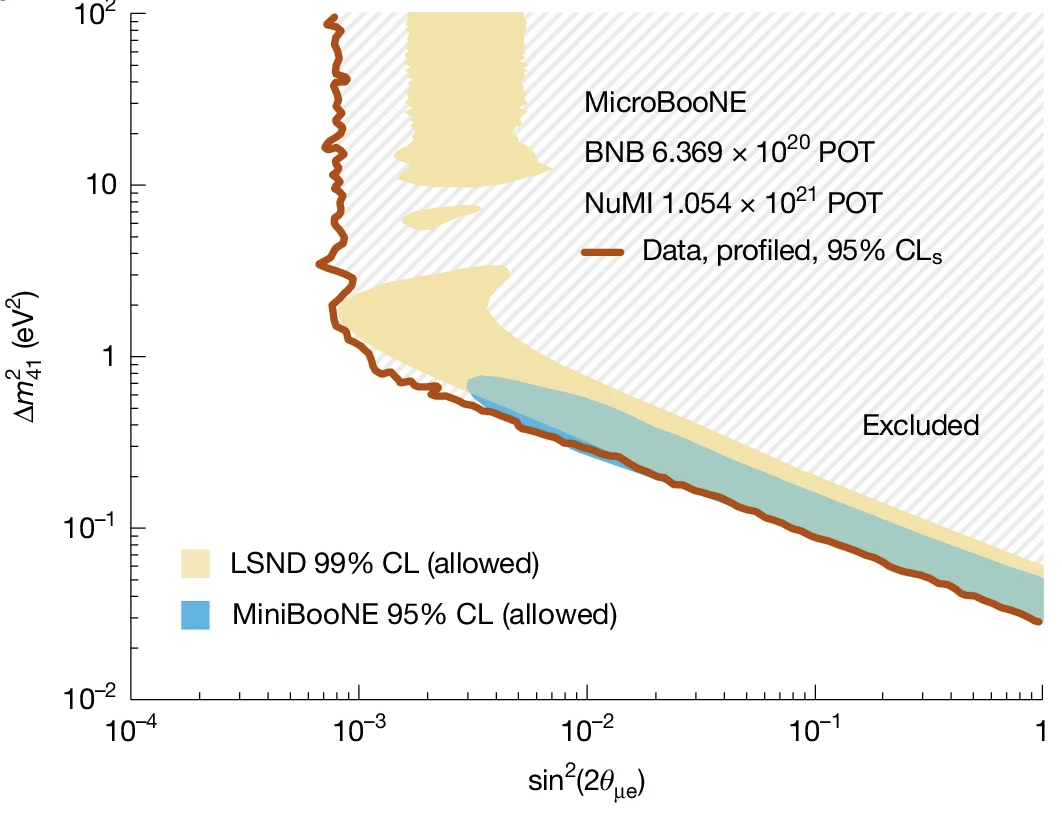
MicroBooNE released its latest results on a sterile neutrino search. The article was published on the journal Nature. The result was picked up by outlets including the NYtimes and Scientific American. A recording of the seminar presenting the results is available on YouTube.
October 2025
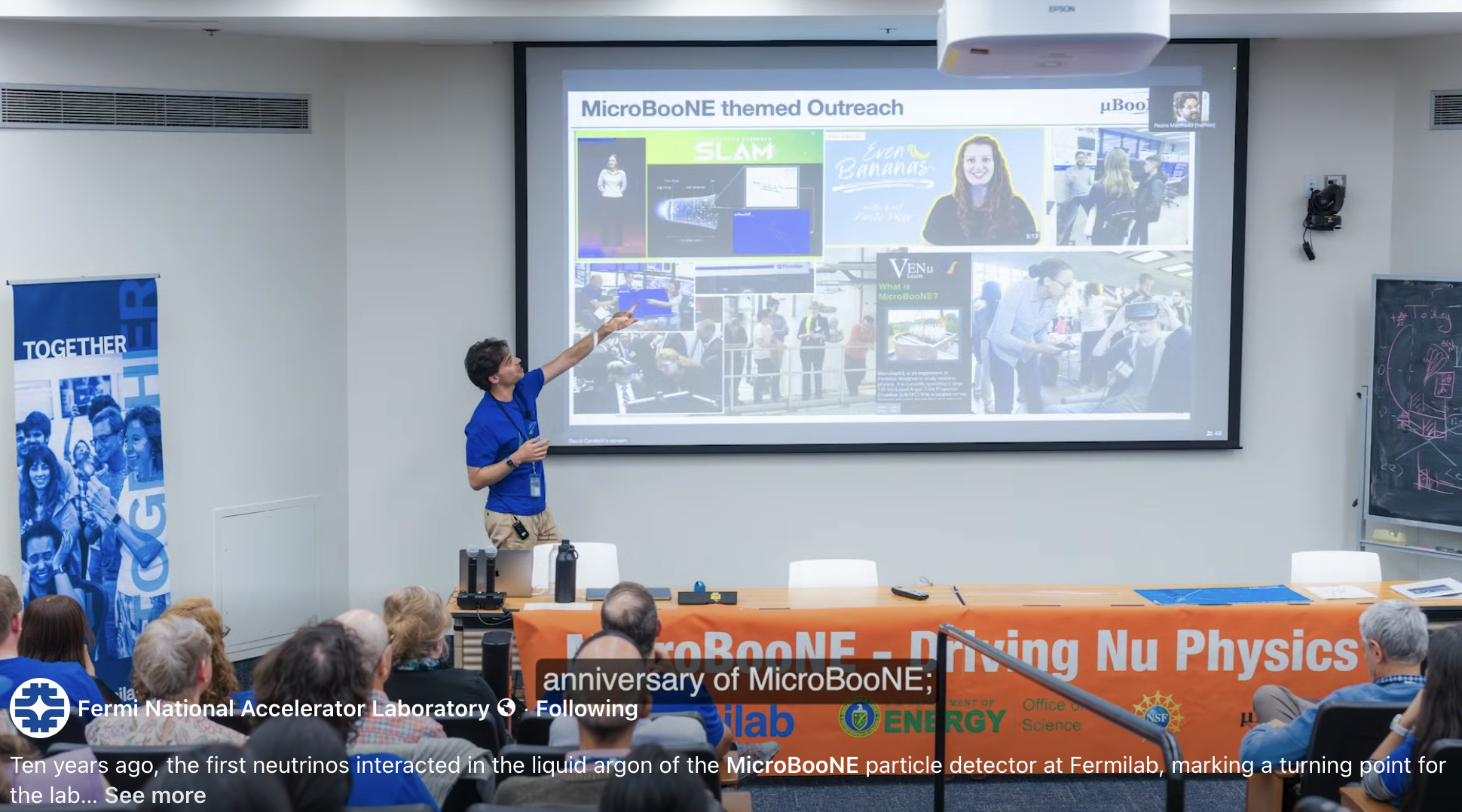
MicroBooNE celebrated its 10th birthday this month. David Caratelli (UCSB), together with Bryce Littlejohn (IIT) presented an overview of the experiment's accomplishments and future prospects. See a video celebrating the 10th anniversary here and photos (including cake) for the celebration here.
September 2025

A MicroBooNE paper led by our group at UCSB was published in Phys. Rev. Lett. as an ``Editor's Suggestion'' and featured on popular science media outlets including APS' ``physics'' magazine, phys.org, and Le Scienze. This work rules out the leading explanation for an experimental anomaly observed by a previous experiment, expanding on respect to previous work by including MicroBooNE's full dataset (the first MicroBooNE analysis to do so!) and performing a broader range of tests of this hypothesis.
June 2025

We released a new paper that introduces a new method for rejecting di-photon backgrounds from neutral pions in. This work introduces the ``Optimal Transport'' method to LArTPC datasets and was done in collaboration with Nathaniel Craig and Jessica Howard (UCSB). The analysis was led by graduate student Michaelia Fang. The paper was submitted to Physical Review D and is available on at arXiv:2506.09238
December 2024
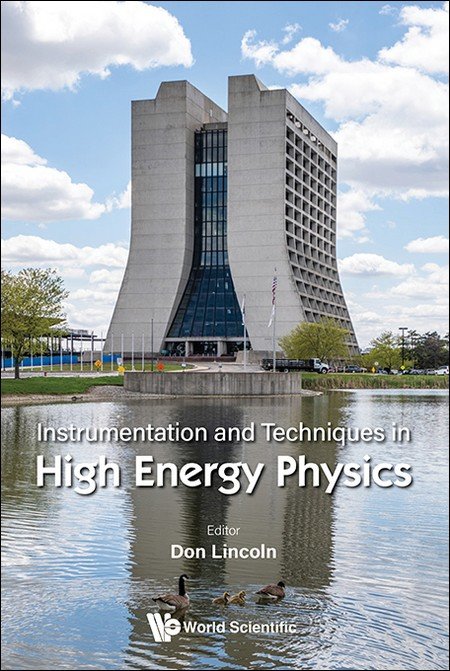
David Caratelli co-authored a high energy physics detector instrumentation textbook. The book, ``Instrumentation and Techniques in High Energy Physics'', was published by World Scientific, edited by Don Lincoln (Fermilab), and is available online for free. I contributed the chapter on ``Liquid Argon Neutrino Detectors'' which is intended for a graduate student audience or anyone - at any level - starting to become involve with research and analysis with Liqid Argon Time Projection Chamber (LArTPC) detectors. You can read that here.